A site-specific mixed reality experience that sets out to do something rarely attempted in AR: create a moment of genuine stillness— one that places civil rights advocates in direct, personal dialogue with the words of Dr. Martin Luther King Jr. By weaving immersive technology, interactive audio, and environmental storytelling into a single cohesive installation, the experience transforms an ordinary office into a space of reflection and renewed purpose.
Where History Takes Root
The experience opens with a virtual pulpit emerging directly from a physical MLK poster on the wall—a deliberate collision of the real and the digital that signals, from the very first moment, that this is not a passive experience.


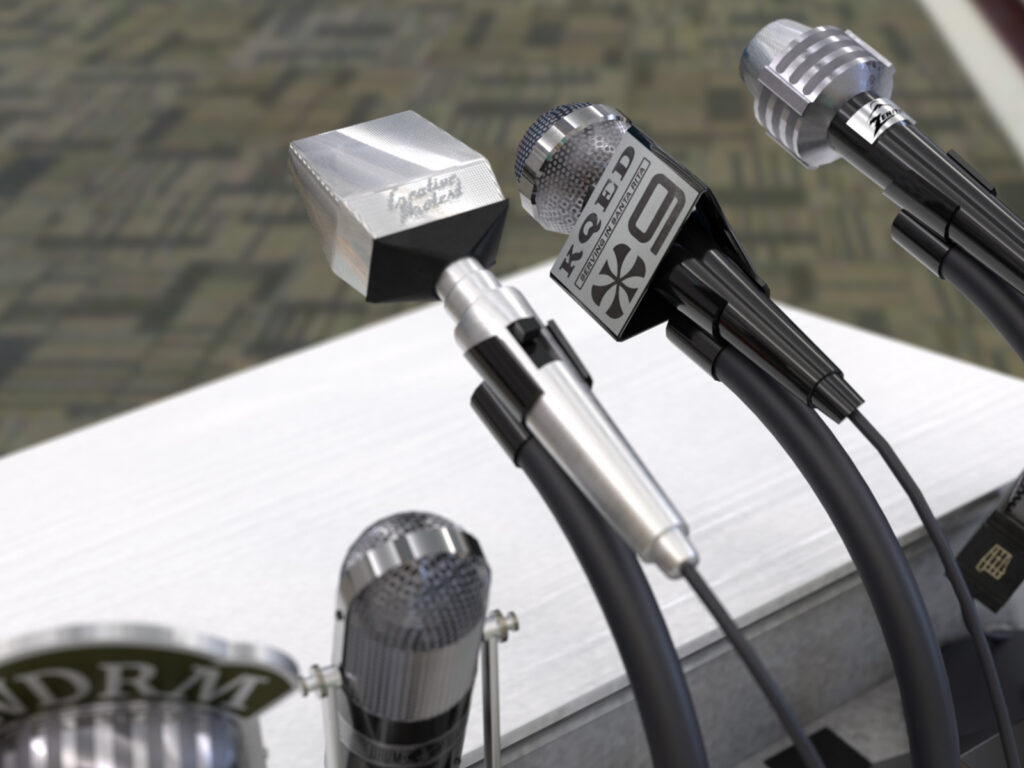

Six Voices, Six Moments
Navigation takes the form of six virtual microphones, each modeled after historical designs from the civil rights era. The speeches they carry were chosen through a staff survey at OJRC — a process that ensured the selection felt personally meaningful to the advocates who would encounter it every day.
Each microphone is also a small act of visual storytelling. The Birmingham mic, for example, bears vintage lettering and an Alabama silhouette filled with jail bars — so the object itself begins speaking before the audio ever plays. This layering of meaning into the interaction objects was central to the design philosophy: every element should earn its place by doing more than one thing.


A Room That Remembers
When a speech begins, the room responds. Protest signs, church pews, a jail cell — environmental elements emerge around the user, quietly reshaping the space to reflect the emotional and historical weight of the words being heard.
These aren’t decorative flourishes. They’re an extension of the argument the experience is making: that civil rights history isn’t something to observe from a distance, but something to stand inside of. Designing that feeling—using space itself as a storytelling medium—is what made this project one of the most meaningful of my career.
“The Dream Echoes On reflects an exceptional level of thoughtfulness and craft. Its quiet emotional impact adds a motivating presence for those of us engaged in civil rights work.”
— Ben Haile, Attorney